
Etheria: Restart — Mobile RPG Review

Etheria: Restart is a turn-based mobile RPG developed by XD Entertainment that combines strategic squad building, character collection, and futuristic storytelling. Released globally after an extensive testing period, the game entered a competitive market dominated by established gacha RPGs. Rather than relying solely on flashy visuals or aggressive monetisation, Etheria: Restart focuses on tactical combat, team synergy, and a science-fiction setting built around virtual reality and artificial intelligence. This review examines the game’s core systems, progression mechanics, visual design, and overall player experience as they stand in 2026.
A Futuristic Setting and Story-Driven Progression
The story takes place in Etheria, a digital world created to preserve humanity after catastrophic events affected the physical world. Players assume the role of a Hyperlinker, an individual capable of connecting with powerful entities known as Animus. These characters serve as both companions and combat units, each possessing unique backgrounds, abilities, and roles within the wider narrative.
Unlike many mobile RPGs that treat story content as secondary, Etheria: Restart places considerable emphasis on world-building. Main campaign chapters gradually reveal the political conflicts, technological challenges, and ethical questions surrounding artificial intelligence. This creates a setting that feels more coherent than the generic fantasy environments commonly found in the genre.
Progression is structured around story missions, side content, and character development. New systems unlock gradually, allowing players to understand mechanics without being overwhelmed. The pacing encourages steady advancement rather than forcing immediate engagement with every feature.
Character Design and the Animus System
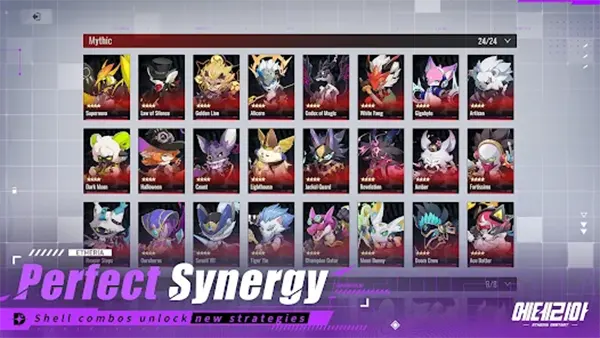
The Animus roster represents one of the strongest aspects of Etheria: Restart. Characters are inspired by mythology, science fiction concepts, and original designs, creating a varied collection that avoids excessive repetition. Each Animus belongs to specific combat archetypes that influence team composition and battle strategies.
Visual presentation plays a major role in character appeal. High-quality 3D models, detailed animations, and professionally produced voice acting help distinguish many of the game’s heroes. Character designs generally prioritise recognisable identities rather than relying exclusively on exaggerated visual elements.
Beyond aesthetics, the Animus system rewards strategic thinking. Players must consider skill interactions, elemental relationships, speed tuning, and support capabilities. Strong teams depend more on synergy than individual power ratings, which increases the depth of roster management.
Combat Mechanics and Strategic Depth
Combat in Etheria: Restart follows a turn-based format where speed, timing, and ability selection significantly influence outcomes. Battles often require more planning than simple auto-play encounters, particularly during advanced PvE challenges and competitive modes.
Each character possesses active abilities, passive effects, and ultimate skills. Many encounters encourage players to manage cooldowns carefully while balancing offensive and defensive actions. Success frequently depends on understanding enemy mechanics rather than relying on raw character strength.
The combat system becomes increasingly rewarding during late-game content. Boss encounters introduce mechanics that demand specific strategies, including debuff management, targeted elimination priorities, and resource conservation. These encounters provide a greater sense of accomplishment than routine campaign missions.
Progression Systems and Endgame Activities
Character progression involves multiple interconnected systems. Players can level heroes, improve skills, equip specialised gear, and unlock additional enhancements through various resources earned across the game. While progression is extensive, the interface presents information clearly, reducing unnecessary complexity.
Endgame content includes challenge stages, resource farming missions, competitive arena battles, ranking activities, and seasonal events. These features provide ongoing objectives after the completion of major story chapters and help maintain long-term engagement.
Resource management remains an important consideration. Players who plan upgrades carefully can build competitive teams without excessive spending. Although premium currency accelerates progression, many core activities remain accessible through consistent play and efficient use of available resources.
Graphics, Monetisation, and Overall Experience
From a technical perspective, Etheria: Restart delivers impressive visual quality for a mobile title. Character animations are fluid, environments feature strong detail, and combat effects enhance battles without creating excessive screen clutter. Performance remains stable on a wide range of modern devices.
The soundtrack complements the futuristic setting effectively. Electronic compositions, atmospheric themes, and dramatic battle tracks help reinforce the game’s identity. Voice performances contribute additional personality to major story moments and character interactions.
User interface design also deserves recognition. Menus are organised logically, important information is easy to locate, and navigation remains efficient even as additional systems unlock. This reduces friction during daily play sessions and routine management tasks.
Is Etheria: Restart Worth Playing in 2026?
For players interested in strategic turn-based RPGs, Etheria: Restart offers a substantial amount of content and a combat system that rewards planning. The combination of science-fiction storytelling, detailed character progression, and tactical encounters distinguishes it from many competing mobile releases.
The game is not without challenges. Some progression systems require significant time investment, and the character acquisition model still follows conventions associated with gacha mechanics. Players seeking immediate access to every character may find progression slower than expected.
Overall, Etheria: Restart stands as one of the more polished mobile RPG experiences available in 2026. Strong production values, meaningful strategic depth, and regular content updates create a game capable of maintaining player interest well beyond the initial campaign. For fans of team-building RPGs and science-fiction worlds, it is a title that merits serious consideration.