
DREDGE Mobile: Fishing, Resource Management and Lovecraftian Horror at Sea
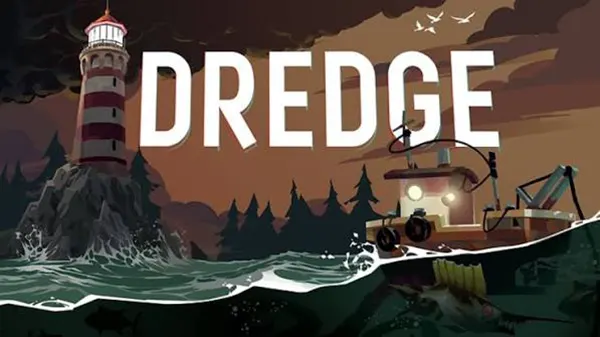
DREDGE Mobile brings Black Salt Games’ unusual fishing adventure to phones and tablets without reducing it to a simplified spin-off. Released for iOS and Android on 27 February 2025, the mobile edition keeps the complete central journey: a lone fisherman works across a remote archipelago, sells his catch, improves a fragile trawler and gradually becomes involved in a mystery that should probably have remained beneath the waves. The appeal comes from the way ordinary work and quiet dread support each other. A successful trip depends on choosing the right fishing grounds, fitting equipment into limited space and returning before darkness turns familiar water into a dangerous place. Touch controls make these routines easy to handle during shorter sessions, while controller support remains available for players who prefer physical buttons. As of 2026, the mobile release also offers the main downloadable expansions, making it a substantial version rather than a secondary companion to the PC and console game.
How DREDGE Turns Fishing into a Daily Working Routine
The opening hours present fishing as a practical job rather than a heroic calling. The player receives a modest boat in Greater Marrow and begins earning money by visiting nearby fishing spots. Each catch uses a short timing-based activity, but the real decision comes afterwards: every fish has a particular shape, and the cargo hold works like a compact packing puzzle. Long eels, broad rays and awkward crabs compete for the same squares as equipment, quest objects and dredged materials. A valuable catch can therefore be impossible to carry unless the hold has been arranged carefully. This simple system gives weight to every trip. Fishing is not only about collecting as much as possible; it is about judging which species are worth the space, how long the journey home will take and what must be left behind.
Time is equally important because it advances while the boat moves and while the player performs actions. Morning water can feel safe and almost restful, yet a distant fishing ground may take most of the day to reach. Staying for one more catch can mean travelling back after sunset, when visibility falls and the fisherman’s panic begins to rise. The clock creates pressure without forcing constant speed. Players can pause to check the map, rearrange cargo or consider the next route, but every meaningful action at sea has a cost. This makes even a routine choice feel personal. Returning early may protect the catch and the hull, while staying out longer could provide enough income for a new engine, rod or net.
The economy remains understandable throughout the game. Fresh fish are sold to local fishmongers, and rarer specimens usually bring better prices. Catches lose value as their condition declines, so carrying a full hold across several regions is rarely sensible unless there is a clear reason. Crab pots and nets can provide additional income, but they also require space, maintenance and collection routes. Dredging sites offer lumber, cloth, metal scraps, research parts and other useful items instead of edible catches. Those materials do not produce the same immediate reward as fish, yet they are essential for expanding the boat. DREDGE continually asks the player to choose between money now and stronger capabilities later, which keeps the fishing loop interesting long after the first few simple trips around The Marrows.
Touch Controls, Short Sessions and Life Aboard the Trawler
The mobile controls were designed specifically for smaller screens rather than copied unchanged from another version. Steering, interacting with fishing spots, using abilities and managing the hold can all be handled through touch input, while external controllers are supported as an alternative. The layout suits the game because DREDGE is based on deliberate movement rather than rapid combat. Players usually have time to line up with a dock, select equipment or turn away from danger. The fishing activities are also brief and readable, making them suitable for touchscreens. On a phone, the interface can naturally feel more compact than it does on a monitor or large television, but the essential actions remain clear once the early tutorials have introduced the icons and menus.
DREDGE also fits shorter mobile sessions because its progress is divided into self-contained voyages. A player can leave port, collect a few catches, sell them and save after docking without needing to complete a lengthy mission. At the same time, the overall structure supports much longer play. One trip often creates a reason for another: a customer asks for a certain fish, a new rod opens access to a different depth, or a strange shape on the map suggests an unexplored island. This rhythm works well when playtime changes from day to day. Ten minutes may be enough to service crab pots and buy an upgrade, while an evening session can cover a major pursuit or an entire regional objective.
Mobile hardware also makes battery use and visual performance relevant. Black Salt Games included adjustable graphical options, allowing effects such as reflections or shadows to be reduced when a device needs a lighter workload. This is useful because the atmosphere depends on lighting, fog and moving water, yet not every phone can run the same settings comfortably. A stable frame rate and readable controls matter more than maximum visual detail during a tense return to harbour. The result is a version that respects the original art direction while giving users some control over performance. Players using recent phones and tablets receive the richest presentation, but sensible adjustments can make the game more practical on older supported devices.
Resource Management That Shapes Every Voyage
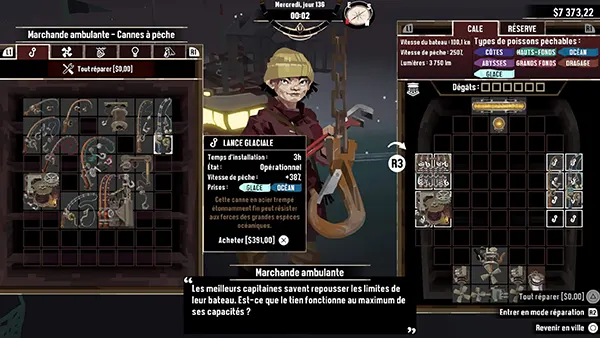
The cargo hold is the centre of DREDGE’s resource management. It contains the catch, but it also houses engines, rods, nets, lights and other installed equipment. Damage can disable individual pieces until repairs are made, and severe impacts may knock cargo overboard. This means the boat is never merely a larger inventory box. Its layout represents the fisherman’s current strengths and weaknesses. A powerful engine reduces travel time but occupies valuable squares. Several rods can cover more water types, yet leave less room for fish. Strong lights help at night, while nets create passive catches during travel. There is no universal arrangement that solves every region, so changing the loadout before a specific journey is often more effective than buying every available item.
Money, materials and research parts form three connected routes of progress. Money pays for equipment, repairs and selected services. Salvaged materials are invested at dry docks to enlarge the hull, create new equipment spaces and improve areas such as storage or rod capacity. Research parts unlock better engines, fishing gear, pots and nets before those items can be purchased. Progress can slow when one of these resources is neglected. A player with plenty of cash may still lack the research needed for advanced gear, while a well-researched catalogue means little if the boat has not been expanded to hold the new equipment. The system encourages varied activity rather than endless fishing in one profitable location.
Preparation becomes especially important as the archipelago opens. Coastal and shallow-water catches are available early, but later areas require equipment suited to oceanic, abyssal, hadal, volcanic or mangrove fishing. The precise categories matter less than the principle: new waters demand new tools. A trip to a distant region may also require a faster engine, a better light and spare room for quest items. Repairs should be completed before departure because a damaged engine can turn a manageable night crossing into a slow retreat. The most reliable approach is to set one clear purpose for each voyage. A material run, a fishing trip and a story objective may overlap, but trying to complete all three with an unprepared boat usually leads to wasted space or unnecessary risk.
Boat Upgrades, Research and the Cost of Going Further
Boat upgrades provide visible progress without removing the need for judgement. More cargo squares allow larger catches, additional engine spaces improve speed and expanded rod sections support specialised equipment. Hull improvements also increase durability, which matters when reefs, storms or hostile creatures begin to threaten longer routes. However, a larger boat does not make the sea harmless. New regions are designed around different hazards, and greater capacity can tempt players to remain away from port for too long. The upgrade system therefore changes the scale of possible journeys rather than cancelling their danger. A well-developed trawler can cross the map quickly and carry valuable equipment, but careless navigation can still damage critical components and erase the profit from an otherwise successful day.
Research choices define the character of the boat. Prioritising engines makes travel safer by reducing the time spent in open water, particularly near sunset. Better rods increase access to rare species and allow more fishing categories to be covered at once. Improved nets earn catches while the boat is moving, whereas advanced crab pots can support steady income near frequently visited islands. There is a practical argument for every branch, and the best order depends on the player’s habits. Someone who prefers planned daytime trips may invest heavily in fishing tools, while a player who regularly pushes into distant waters may value speed and strong lights first. Because research parts are limited during much of the game, each early decision has a noticeable effect.
The downloadable content extends these resource decisions rather than replacing them. The Pale Reach adds a frozen southern region with ice-related obstacles, new catches and a compact storyline. The Iron Rig introduces an offshore industrial structure, additional equipment and environmental problems linked to its operations. The Blackstone Key opens a workshop containing two useful items for the early game. On iOS, the first area of the standard release can be played before a one-time purchase unlocks the base game, while the expansions are separate in-app purchases. Apple Arcade subscribers can access DREDGE+ as a Complete Edition containing the released add-ons. Android users receive the full base game through Google Play, with current store details depending on region and subscription availability.
Lovecraftian Horror Beneath a Calm Mobile Adventure
DREDGE’s horror works because the game first teaches the comfort of routine. The boat leaves harbour in clear weather, gulls circle above the water and each catch has an obvious financial value. Then small details begin to disturb that order. Some fish return from the depths with impossible anatomy. Islanders speak in guarded fragments. Relics recovered from wrecks seem connected to events no one wants to explain directly. The game rarely relies on long speeches or constant shocks. Its Lovecraftian influence appears through incomplete knowledge, corrupted nature and the suspicion that the sea contains forces too old and too large to understand. The fisherman remains an ordinary worker trying to earn a living, which makes his contact with the unknown more unsettling.
Panic turns psychological strain into a visible game system. It rises when the fisherman stays out at night and can be affected by strange events or dangerous areas. As panic grows, perception becomes unreliable. Threats may appear in the fog, familiar routes seem less secure and apparently harmless lights can lead the boat away from safety. Some dangers are real, while others exploit uncertainty. The player may not immediately know which is which, and that doubt is more effective than simply placing monsters everywhere. Light, sleep and sensible travel hours help control panic, but story progress eventually requires entering places where caution cannot remove every risk. Horror becomes part of route planning instead of a separate sequence.
The day-and-night contrast is particularly effective on a mobile screen. During daylight, the compact view supports close attention to the hold, fishing spots and nearby rocks. At night, the same limited frame can make the surrounding darkness feel more restrictive. Headphones strengthen the effect because distant sounds, strained music and sudden changes in the sea become easier to notice. The visual style avoids realism, using strong shapes and painted colour to keep islands and creatures readable. This helps the game remain clear on smaller displays while preserving its oppressive tone. The fear does not come from technical spectacle; it comes from knowing that home is close, the cargo is valuable and one more mistake may leave the boat damaged in black water.
Is DREDGE Mobile Worth Playing in 2026?
In 2026, DREDGE Mobile remains a strong choice for players who want a complete single-player game rather than a collection of short repeatable tasks. It has a defined story, a connected world and progression that comes from learning how its systems work. There are no energy limits controlling how often the boat can leave port, and the central experience is built around ownership or an eligible subscription rather than advertising interruptions. The first iOS region can be tested before buying, which gives new players enough time to assess the touch controls and basic loop. The mobile release is especially suitable for those who enjoy calm management games but want tension and narrative beneath the routine.
The game is less suitable for anyone expecting fast combat, competitive play or a fully relaxed fishing simulation. Its pace is measured, and a significant part of the experience involves organising cargo, revisiting ports and preparing equipment. Night travel can punish impatience, while some objectives ask the player to infer meaning from brief conversations and environmental clues. Text and interface elements may also feel small on compact phones, so a larger handset or tablet can provide a more comfortable view. These are not accidental flaws hidden behind the premise; they are part of a design that values planning, uncertainty and atmosphere. Players who accept that rhythm are likely to find the mobile format surprisingly natural.
What gives DREDGE lasting value is the balance between control and vulnerability. Better equipment, a larger hull and detailed knowledge of the map make the fisherman more capable, yet the sea never becomes completely familiar. Fishing supplies the money, resource management determines how far the boat can travel and Lovecraftian horror challenges the belief that every problem can be solved through preparation. The mobile edition preserves that relationship while adding touch input, controller support and adjustable visual settings. With the base journey and major expansions available on current mobile devices, it offers a substantial way to play the entire adventure in 2026, from the first modest catch in The Marrows to the final choices surrounding the archipelago’s buried past.