
The Talos Principle Reawakened on Mobile — Is There Still Room for Deep First-Person Puzzles on Smartphones?
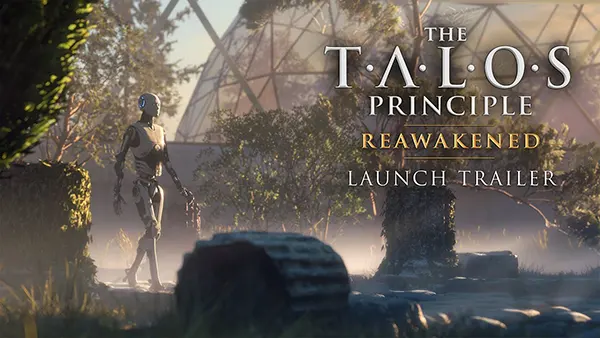
The return of The Talos Principle in a mobile-friendly form raises a timely question: can complex, philosophy-driven puzzle games still find an audience on smartphones in 2026? While the mobile market is often dominated by short sessions and simplified mechanics, a quieter shift has been happening. More players are seeking thoughtful, slower-paced experiences that reward attention and patience. This creates space for titles that challenge not just reflexes, but reasoning and perception.
How Mobile Hardware Has Changed the Possibilities for Puzzle Design
Over the past few years, smartphone hardware has reached a point where technical limitations are no longer the main barrier for complex game design. Modern chipsets handle dynamic lighting, large environments, and physics-based puzzles with stability that was previously reserved for consoles. This allows games like The Talos Principle Reawakened to maintain visual clarity and logical consistency without simplifying their core systems.
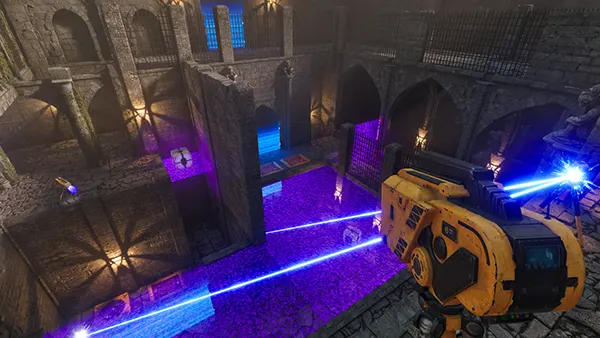
Touch controls, once seen as a constraint, are now more refined and predictable. Developers have learned how to design interaction systems that feel natural rather than compromised. Rotating objects, activating switches, or aligning beams can be executed with precision, provided the interface is thoughtfully adapted rather than directly copied from PC versions.
Battery efficiency and thermal management have also improved, enabling longer play sessions without significant performance drops. This matters for puzzle games that rely on immersion and continuity. Interruptions caused by overheating or rapid battery drain can break concentration, which is critical when solving layered challenges.
Adapting Complexity Without Diluting the Experience
One of the main concerns when bringing a game like The Talos Principle to mobile is whether its complexity needs to be reduced. In practice, successful adaptations focus on restructuring the interface rather than simplifying the puzzles themselves. The logic remains intact, but the way players interact with it becomes more intuitive.
Camera control is a key example. On mobile, smooth camera movement must be carefully tuned to avoid frustration. Developers often introduce subtle assistance systems, such as auto-alignment or context-sensitive interactions, which reduce friction without changing the underlying challenge.
Another important aspect is readability. Puzzle elements must be clearly distinguishable even on smaller screens. This requires adjustments in contrast, object scale, and UI layering, ensuring that players spend their mental energy on solving problems rather than interpreting visuals.
Player Behaviour in 2026: Short Sessions vs Deep Engagement
Mobile gaming has long been associated with quick, disposable sessions. However, usage data in recent years shows a growing segment of players engaging with longer, more meaningful experiences. Subscription services and premium titles have contributed to this shift, encouraging players to invest time rather than chase instant rewards.
The Talos Principle fits into this evolving pattern by offering self-contained puzzle spaces that can be completed in varying timeframes. A single puzzle may take five minutes or half an hour, depending on the player’s approach. This flexibility aligns well with mobile usage habits, where sessions are often interrupted but not necessarily shallow.
Importantly, players in 2026 are more accustomed to cross-platform ecosystems. Someone might start a puzzle on their phone during a commute and continue on a tablet or PC later. This continuity supports deeper engagement and makes complex games more accessible across different contexts.
The Role of Narrative and Philosophy in Mobile Games
Unlike many mobile titles, The Talos Principle places strong emphasis on narrative and philosophical themes. Questions about consciousness, identity, and artificial intelligence are woven into the gameplay rather than presented as optional extras. This creates a different kind of engagement, one that extends beyond mechanical problem-solving.
There is evidence that players are increasingly receptive to such themes, especially as gaming audiences mature. Mobile devices are no longer seen purely as casual platforms; they are primary devices for many users. As a result, expectations regarding storytelling and depth have risen.
Audio design plays a crucial role here. Voice recordings, ambient soundscapes, and subtle musical cues help maintain immersion even when playing in less controlled environments. With modern headphones and spatial audio support, mobile devices can deliver a surprisingly rich narrative experience.
Market Reality: Can Deep Puzzle Games Compete Commercially?
From a commercial perspective, deep puzzle games occupy a niche rather than the mainstream. Free-to-play titles with simple mechanics still dominate revenue charts. However, the success of premium mobile games and curated app stores has shown that there is a sustainable audience willing to pay for quality and depth.
The Talos Principle Reawakened benefits from brand recognition and a proven design framework. This reduces risk compared to entirely new intellectual properties. Players who enjoyed the original version are likely to revisit it on mobile, especially if the adaptation feels complete rather than compromised.
Monetisation models have also evolved. Instead of aggressive in-app purchases, many developers now opt for one-time purchases or expansion-based models. This aligns better with the expectations of players seeking thoughtful experiences, where interruptions for monetisation would undermine immersion.
Long-Term Viability of First-Person Puzzle Games on Mobile
The future of this genre on mobile depends less on technical capability and more on design discipline. Developers need to resist the temptation to oversimplify mechanics in pursuit of broader appeal. Instead, success lies in making complexity accessible without removing it.
Cloud gaming and streaming services may further expand possibilities. High-end experiences can be delivered to mobile devices without relying entirely on local hardware. This opens the door for even more ambitious puzzle designs, including larger worlds and more intricate systems.
Ultimately, there is still space for deep first-person puzzles on smartphones. The audience may not be as large as for casual games, but it is more engaged and more willing to invest time. Titles like The Talos Principle demonstrate that mobile gaming can support not only entertainment, but also reflection and intellectual challenge.